The Dining Experience as a Human System
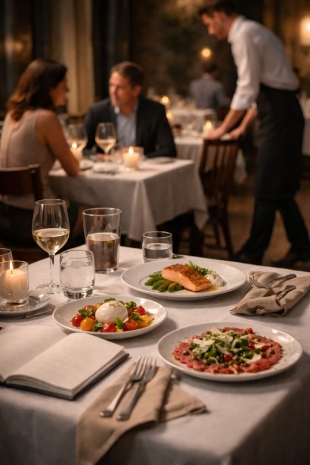
A restaurant is a real system defined by individuals, procedures, and shared promises. Guests come in with moods, wants, and expectations shaped by their day, company, and reasons for eating out. Staff members come equipped with training, experience, judgment, and emotional labor. When such elements converge in real time, the dining moments are mellow and not in any way contingent on any one action or fact.
Experiences, unlike food or decoration, can never be standardized. They require timing, sensitivity, and responsiveness to situations that twist and turn every minute. The very best restaurants understand this and develop systems that encourage human interaction rather than try to rule it.
Experience Beyond Individual Moments
Guests do not experience service, atmosphere, and food as separate elements. These components blend into a continuous impression that begins before seating and continues after the meal ends. A small delay at the door, a warm greeting, or a calm room can shape how everything else is perceived.
Because experience is cumulative, consistency matters more than perfection. Small, thoughtful choices repeated over time build trust and comfort, even when individual moments are imperfect.
Emotional Context at the Table
People come to restaurants for many reasons: celebration, convenience, connection, routine, or escape. The same meal can feel very different depending on whether guests are relaxed, stressed, excited, or distracted.
Restaurants that recognize this variability leave space for guests to define their own experience rather than forcing a single mood or pace. Flexibility allows the experience to adapt to real emotional needs.
Designing for Real People
Great dining experiences have environments that allow for real human behavior to take place, not what is expected of human beings. Alongside this, there has to be tolerance for noise, hesitation, distraction, changing coordinations, for giving uneven attention here and there.
Those having more flexible systems seem more humane than others having more rigid constraints. The guest feels it when a space offers him/her the opportunity to feel one's self.
Service Flow and the Rhythm of a Meal
Service flow is the invisible structure that holds a meal together. It determines how smoothly guests move from arrival to ordering, eating, and departure. When flow works well, guests rarely notice it. When it breaks down, discomfort appears quickly and can overshadow even good food.
Flow is not about speed alone. It is about timing, coordination, and responsiveness to the table’s cues, allowing the meal to unfold naturally.
Arrival and First Impressions
The dining experience begins at the door. Being acknowledged promptly, even if seating is delayed, sets a tone of care and awareness. Silence, confusion, or visible stress at arrival can create unease that lingers into the meal.
Clear transitions from entrance to table help guests settle physically and mentally. Feeling oriented in the space allows attention to shift toward the meal itself.
Ordering Without Pressure
Good service allows guests time to read, ask questions, and decide. Rushed ordering can make guests feel managed, while long delays without communication can create frustration.
Servers who read body language and table dynamics help ordering feel collaborative rather than transactional. Guidance offered at the right moment builds confidence.
Pacing Courses and Transitions
Pacing shapes comfort throughout the meal. Dishes arriving too quickly interrupt conversation, while long gaps can make guests restless or self-conscious.
Successful service adapts pacing as the meal progresses, responding to cues rather than following a rigid schedule set at the start.
Staff Interaction and Guest Connection
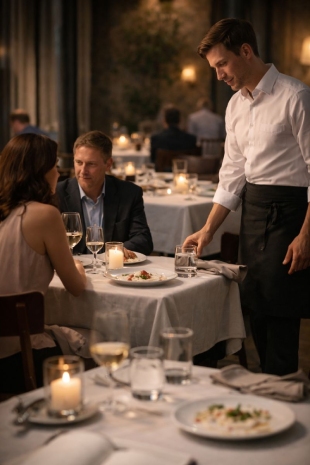
Staff interaction is where restaurants become human rather than mechanical. Guests often judge service not by friendliness alone, but by awareness, judgment, and emotional intelligence. Being attentive without intruding is a learned skill.
Good service creates a sense of being cared for without being watched or managed.
Presence Without Interruption
Effective servers are visible when needed and unobtrusive when not. They notice empty glasses, finished plates, and subtle changes in mood without constant check-ins.
This balance allows guests to remain present with one another instead of focusing on the mechanics of service.
Language, Tone, and Confidence
The way staff speak matters as much as what they say. Calm, clear language builds trust and reduces uncertainty. Overly scripted or exaggerated tone can feel impersonal or forced.
Confidence reassures guests that the experience is under control, even when adjustments or delays occur.
Handling Problems with Care
Mistakes are inevitable in live service environments. How they are handled often matters more than the mistake itself. Acknowledgment and clear communication restore trust more effectively than excuses or avoidance.
Guests tend to remember recovery moments long after forgetting minor errors, especially when they feel respected.
Atmosphere and Sensory Environment
The atmosphere is sensory stimulant. It is mediated by lighting, sound, temperature, and movement. This alters taste, length of stay, comfort level and stress level of the guests, shaking up the consequences, all in a very subtle tempo.
A successful atmosphere does not solicit attention yet completely supports the experience it was supposed to enhance.
Lighting and Visual Comfort
The mood of a dining area can be significantly impacted by its natural or artificial lighting. Direct bright light may render an interior clinically sterile and taxing; by contrast, light that is overly dim imposes a strain on the eyes of the diners.
Proper lighting highlights and adds value to both food and human presence, allowing guests to be at ease and feeling entirely free; that is the definition of constructing space built around defamation.
Sound, Music, and Noise Levels
Sound shapes energy and social behavior. Music volume, background noise, and room acoustics influence how guests speak, listen, and linger. Too much noise discourages conversation, while silence can feel tense.
Good sound design considers absorption, spacing, and volume rather than relying on music alone to set mood.
Temperature and Physical Ease
Comfort depends on physical factors such as temperature and airflow. Guests who feel too cold or too warm become distracted from the meal and from one another.
Attention to these details signals care even when guests do not consciously register the cause.
Table Layout and Spatial Relationships
How tables are arranged affects privacy, movement, and social dynamics. Layout choices influence whether guests feel relaxed, exposed, or crowded before a word is spoken.
Spatial design shapes how people interact with each other and with staff throughout the meal.
Privacy and Proximity
Table spacing affects conversation and comfort. Too close, and guests may feel overheard. Too far apart, and the room can feel empty or disconnected.
Balanced proximity supports both intimacy and shared energy within the dining room.
Movement and Visibility
Clear paths for staff reduce disruption and accidents. Guests notice when servers move smoothly rather than constantly navigating obstacles or squeezing between tables.
Visibility also matters. Being able to see staff easily reassures guests that help is available when needed.
Flexibility for Different Group Sizes
Restaurants serve couples, families, and groups with different needs. Flexible layouts allow adaptation without compromising comfort or flow.
Spaces that accommodate change tend to feel more welcoming and resilient over time.
Pacing, Time, and Guest Autonomy
Time is one of the most personal elements of the dining experience. Some guests want efficiency, others want to linger. Respecting this difference builds goodwill and trust.
Restaurants that allow guests to control their own pace feel generous rather than demanding.
Reading the Table
Servers who observe body language can adjust pacing naturally. Leaning forward, closing menus, or stacking plates all signal readiness for the next step.
Ignoring these cues creates friction, even when service is technically correct.
Encouraging or Discouraging Lingering
Some restaurants rely on turnover, others on extended stays. Lighting, music, and service rhythm subtly communicate expectations.
Problems arise when signals are mixed, leaving guests unsure whether they are welcome to stay or expected to leave.
Ending the Meal Gracefully
The close of a meal matters as much as the beginning. Clear signals around payment and departure help guests leave without awkwardness or pressure.
A thoughtful goodbye reinforces positive impressions and completes the experience as a whole.
Consistency and the Emotional Memory of Dining
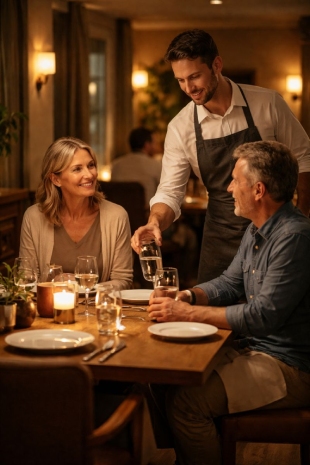
Visitors get to create emotional memories based on patterns of experiences rather than the isolated moments. Consistency will mean more to most than any novelty or surprise.
An experience you can bank on gives visitors a chance to put their guard down and know what to expect.
Why Consistency Feels Safe
Predictability reduces cognitive effort. Guests can focus on conversation and connection rather than evaluating every detail.
This sense of safety is especially important for repeat visits and routine dining.
Balancing Routine and Attention
Consistency does not mean indifference. Repeating systems should still allow room for personal attention and adaptation.
The best experiences feel both familiar and responsive at the same time.
Memory and Return Visits
People return to restaurants that make them feel understood. Emotional memory often outweighs specific dishes when deciding where to go again.
Experience becomes a form of quiet loyalty built over time.
Why the Dining Experience Matters
The dining experience connects food to feeling. It shapes how meals are remembered and how restaurants fit into daily life. Understanding experience shifts attention from isolated elements to relationships and systems.
For Guests
Recognizing how service and atmosphere work together helps guests articulate preferences and choose places that suit their needs and mood.
Awareness leads to better alignment between expectation and reality.
For Restaurants
Focusing on experience encourages investment in training, design, and systems that support people rather than shortcuts.
Experience becomes a long-term asset rather than a short-term tactic.
For Restaurant Culture
Dining experiences reflect how societies value care, time, and shared space. Studying them reveals broader cultural priorities.
Restaurants become mirrors of everyday social life.
Where Hospitality Lives Between the Details
Dining experience is all about the small, human choices taken time and time again. The service flow, ambience, and guest management are meant to go best when they feel natural rather than if they were overly engineered, much improved upon by attentiveness to the finer details. The noiseless way of this art is not a performance, but a continual practice of care that gives shape to the way food is to be shared, remembered, and returned to.
With the kind help from