The Restaurant as a Coordinated System
As a system should not work as a restaurant, that whole thing is a set of intertwined roles. The kitchen, service, and operations need each other very much. As such, a delay in the way prep work is carried out, an unclaimed message, or some bit of staffing crisis matters quickly in a vast way. But, since awareness and proper networking are above being hard and fast pressures, these minor problems are smoothed out to day-to-day routineness.
Interdependence Over Hierarchy
Although restaurants have clear roles and lines of responsibility, daily success depends more on interdependence than strict hierarchy. A well-prepared kitchen still struggles if communication with the dining room breaks down, just as attentive service cannot compensate for disorganized production.
Behind the scenes, effective teams focus on handoffs, timing, and mutual support. The goal is not to protect boundaries, but to keep the system moving smoothly under changing conditions.
Routines That Support Flexibility
Strong operations are built on routines. Prep lists, opening checks, station setups, and service protocols create stability and predictability. Paradoxically, these routines make flexibility possible by reducing uncertainty and mental load.
When fundamentals are handled consistently, teams have more capacity to respond calmly to unexpected challenges, whether that means a late delivery, an overbooked service, or a sudden staff absence.
Why Guests Rarely See the Work
When operations function well, they are invisible. Guests notice problems far more easily than competence. The goal behind the scenes is not recognition, but the absence of friction or confusion.
This invisibility is often mistaken for simplicity, when in reality it reflects careful planning, repetition, and collective discipline applied day after day.
Kitchen Preparation Before Service
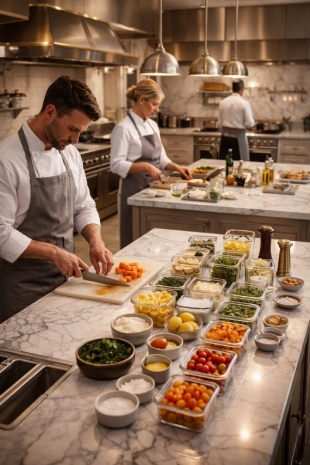
Long before guests arrive, the kitchen is already active. Preparation lays the foundation for everything that follows. Ingredients are received, checked, stored, and transformed into components that will later become finished dishes under time pressure.
Good prep is about anticipation rather than speed. It ensures that the kitchen can respond quickly and consistently once orders begin arriving, without sacrificing quality or focus.
Planning and Prep Lists
Prep lists translate menus into actionable tasks. They account for expected volume, reservations, historical patterns, and seasonal variation. A well-made list balances ambition with realism, ensuring readiness without overproduction.
Incomplete or inaccurate prep creates stress during service, while thorough preparation creates calm, clarity, and confidence across the team.
Ingredient Handling and Organization
Behind the scenes, organization is critical. Ingredients must be stored safely, labeled clearly, rotated correctly, and arranged for efficient access. Poor organization slows production, increases errors, and raises safety risks.
Clean, logical setups support speed without rushing. They help maintain quality and consistency even during the busiest services.
Skill Development Through Repetition
Preparation is also where skills are refined. Cutting, seasoning, portioning, and cooking repeated tasks builds muscle memory and precision over time.
This repetition allows cooks to perform reliably during service, even as conditions change and pressure increases.
Service Setup and Front-of-House Readiness
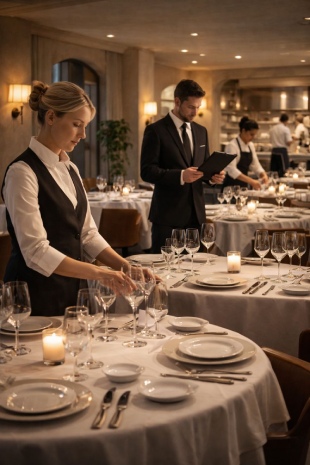
The staff of the kitchen would be in there cooking away while the dining room service team is busy turning the dining room into a restaurant. Together, even before a single kind word has been exchanged, these two forces are responsible for laying the very foundation of the overall guest experience. The dining room uses its own language of love, order, and intent before one speaks a single word.
Room Setup and Table Readiness
Tables are set with intention. Spacing, alignment, cleanliness, and lighting all matter. Small inconsistencies can create a sense of disorder that guests feel immediately, even if they cannot identify why.
A well-prepared room communicates professionalism and attention without explanation, setting a calm foundation for the meal.
Pre-Shift Communication
Before service begins, teams often gather to align expectations. Information about reservations, menu changes, pacing goals, and special needs is shared openly.
These briefings reduce surprises and help staff feel prepared rather than reactive, creating confidence that carries into guest interactions.
Mental Preparation for Service
Service work requires emotional readiness as well as technical skill. Staff must be attentive, patient, and adaptable for hours at a time, often under pressure.
Behind the scenes, preparation includes shifting focus from personal concerns to collective responsibility and shared rhythm.
Coordination During Service
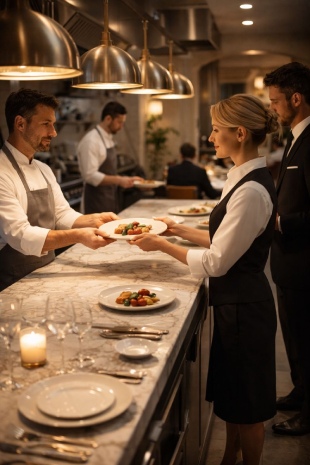
Once service begins, coordination becomes constant and dynamic. Orders flow in, dishes move out, and information travels back and forth between kitchen and dining room in real time.
The goal is to maintain rhythm while adjusting continuously, protecting the guest experience from internal stress or disruption.
Communication Between Kitchen and Floor
Clear, concise communication is essential. Timing updates, special requests, allergies, and pacing decisions must be shared quickly and accurately.
Miscommunication is one of the most common sources of breakdown, making this exchange a core behind-the-scenes skill rather than a secondary concern.
Managing Pace and Volume
Service rarely unfolds evenly. Rushes happen, tables linger longer than expected, and unexpected gaps appear. Teams must adjust pacing in real time without panic.
Experienced staff learn to read the room and the kitchen simultaneously, balancing speed with control and judgment.
Problem Solving in Motion
Issues arise during every service: missing items, delayed dishes, incorrect orders, or last-minute dietary needs. The behind-the-scenes challenge is solving these problems quietly and decisively.
Guests often remain unaware of how much adjustment occurs to protect their experience and preserve flow.
Teamwork and Role Specialization
Within an overall target goal, food businesses entail the deployment of specialized services for differing functions. Each cluster contributes separately to the cause, but the combined effect ensures that the kitchen runs in harmony.
Defined Roles, Shared Responsibility
Clear roles prevent confusion and duplication of effort, but rigid boundaries can create gaps when conditions change. Strong teams understand when to step beyond their job description to support others.
This flexibility is especially important during busy or unpredictable services, where adaptability matters more than formality.
Trust Built Through Consistency
Trust grows when team members perform reliably. Knowing that others will complete their tasks allows everyone to focus on their own responsibilities without constant checking.
Inconsistent performance creates tension and increases cognitive load across the team, weakening the system as a whole.
Learning Through Observation
Much restaurant knowledge is informal, passed through observation rather than instruction. New staff learn rhythms, shortcuts, and expectations by watching experienced colleagues.
This shared understanding strengthens team cohesion and reinforces culture over time.
Daily Operations Beyond Service Hours
The work does not end when guests leave. Closing tasks, cleaning, ordering, and planning are essential parts of daily operations that shape future services.
These quieter hours often determine how smoothly the next day will run.
Cleaning and Resetting
Cleaning is not only about hygiene, but about resetting systems. Tools are washed, stations are reorganized, and issues are noted for repair or follow-up.
A thorough close reduces stress and errors in the following service, creating continuity across days.
Inventory and Ordering
Behind the scenes, inventory management ensures consistency. Ingredients must be tracked, ordered accurately, and rotated carefully to avoid waste and shortages.
Poor inventory practices lead to rushed substitutions, inconsistent menus, and unnecessary pressure during service.
Planning for Tomorrow
Menus are reviewed, prep levels adjusted, and staffing needs anticipated. This planning allows restaurants to respond proactively rather than reactively.
Strong operations look ahead while reflecting on what just happened, using experience as guidance.
The Emotional Labor of Restaurant Work
Restaurant work involves significant emotional labor. Staff manage their own emotions while responding to guests, teammates, and pressure throughout long shifts.
This aspect of the job is rarely visible, yet it shapes both service quality and team sustainability.
Maintaining Composure Under Pressure
Active services call for cool-headed decision makers. In making deep-space decisions, employees maintain stress control for smooth operations.
One's ability to come to grips with one's emotions fosters clear-minded thinking, surface communication, and repeatable work.
Supporting Each Other
Team culture plays a critical role in managing emotional load. Simple gestures of support and acknowledgment can prevent burnout and resentment.
Restaurants that recognize emotional labor tend to retain staff longer and function more sustainably.
Recovery After Service
After intense services, teams need time to decompress. Closing routines and shared reflection help transition out of high-alert mode.
This recovery supports long-term well-being and performance rather than short-term survival.
Consistency as an Operational Achievement
From the guest perspective, consistency feels natural and effortless. Behind the scenes, it is the result of constant effort, alignment, and adjustment.
Consistency requires coordination across people, systems, and expectations.
Repetition Without Stagnation
Repeating tasks daily can lead to mastery or complacency. Strong operations encourage attention and care even in routine work.
Consistency improves when teams remain engaged rather than automatic.
Adapting Without Disrupting
Menus change, staff rotate, and conditions shift. Successful restaurants adapt gradually, protecting familiar structures while making necessary updates.
This balance preserves guest trust while allowing evolution.
Why Consistency Builds Reputation
Guests return to restaurants they can rely on. Behind the scenes, this reliability is built one service at a time.
Reputation grows from accumulated experience rather than isolated standout moments.
The Work That Makes It Look Easy
The purpose of this page is to delve into the restaurant kitchen, service, and daily operation processes that work together-consequently creating a good dining experience. On tap were preliminary preparations undertaken before service, coordination during the rush hours, and the daily routine of the kitchen that ensure the perpetuation of the kitchen process. In its discussion, the page will familiarize the reader with the delicate, intricate, and tasking labor involved in creating an environment in which restaurant service could feel peaceful, reliable, and natural to the guest’s criteria.
With the kind help from